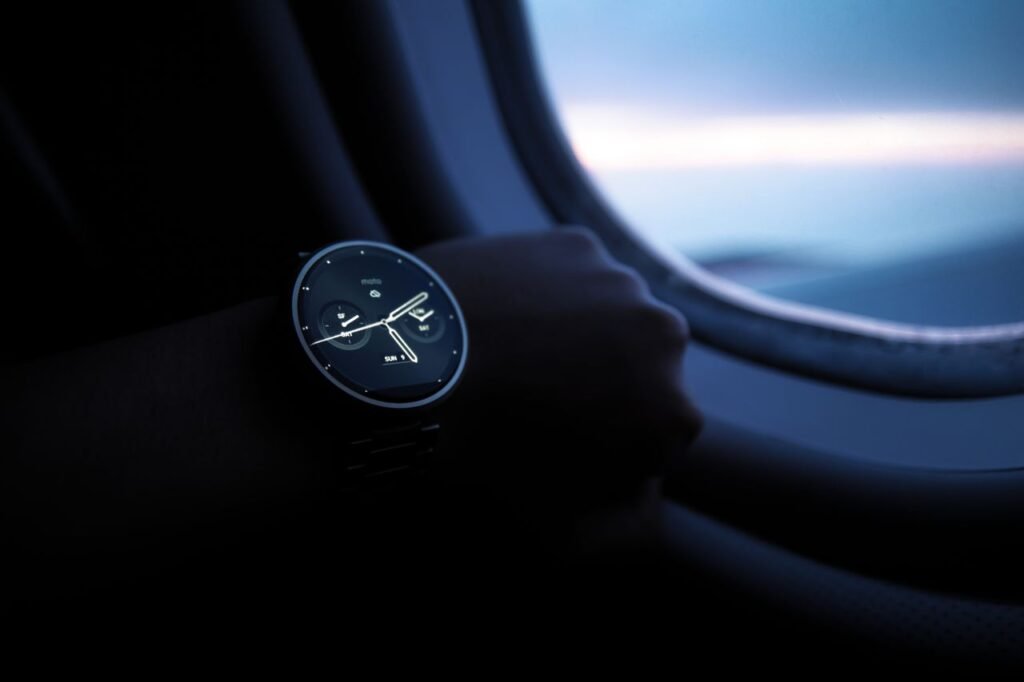
Smartwatches have become much more capable in recent years, but aviation smartwatches take the concept a step further by putting pilot-focused information directly on your wrist.
Modern aviation watches can provide access to airport information, aviation weather, Direct-To navigation, flight logging, UTC time, altitude information and even connectivity with compatible avionics.
For pilots shopping in 2026, Garmin’s D2 family remains one of the most prominent aviation-focused smartwatch lines, ranging from the more accessible D2 Air X15 to the advanced D2 Mach 2 and connectivity-focused D2 Mach 2 Pro.
This guide explains what aviation smartwatches actually do, which features matter and how to decide whether one deserves a place in your cockpit.
Quick answer: The Garmin D2 Air X15 is a strong option for pilots who want aviation features in an everyday smartwatch. The D2 Mach 2 adds more advanced aviation mapping and premium capabilities. The D2 Mach 2 Pro goes further with inReach satellite and LTE connectivity for supported communication and SOS functionality. The right choice depends on how much aviation capability you actually want on your wrist.
What Is an Aviation Smartwatch?
An aviation smartwatch combines normal smartwatch functions with features designed specifically for pilots.
Depending on the model, these features can include:
- Aviation GPS navigation
- Worldwide airport databases
- Direct-To navigation
- Nearest-airport functions
- HSI-style course guidance
- METAR and TAF information
- Flight logging
- UTC and multiple time zones
- Altitude alerts
- Aviation maps
- Avionics connectivity
- Aircraft-status information
The result is essentially a regular premium smartwatch with another layer of aviation-focused tools.
Best Aviation Smartwatches for Pilots in 2026
Garmin D2 Air X15
Excellent for pilots who want useful aviation tools combined with a modern everyday smartwatch experience.
Garmin D2 Mach 2
Designed for pilots looking for more advanced aviation mapping, longer battery life and premium features.
Garmin D2 Mach 2 Pro
The connectivity-focused option, adding inReach satellite and LTE capabilities to the advanced D2 platform.
1. Garmin D2 Air X15
The D2 Air X15 is designed to combine aviation functionality with the size and style of an everyday smartwatch.
It uses a bright 1.4-inch AMOLED touchscreen and includes GPS aviation navigation, a worldwide aeronautical database, HSI course guidance and access to aviation weather information.
Pilots can use Direct-To navigation to navigate toward an airport or waypoint in the watch’s aviation database.
The watch also includes a built-in LED flashlight with white and red-light options, which can be particularly convenient during nighttime operations.
D2 Air X15 Highlights
- 1.4-inch AMOLED touchscreen
- 45 mm case
- Worldwide aeronautical database
- Direct-To navigation
- Nearest-airport navigation
- HSI course needle
- METAR and TAF information
- Barometric altimeter
- Flight logging
- UTC and multiple time zones
- Built-in LED flashlight
- PlaneSync compatibility
- Compatible avionics connectivity through Garmin Pilot
- Built-in speaker and microphone
- Health and fitness tracking
- Up to 10 days of battery life in smartwatch mode
Who Is the D2 Air X15 For?
The Air X15 makes sense for pilots who want aviation-specific functionality without necessarily moving into the highest end of Garmin’s aviation-watch lineup.
It can also work well for pilots who want one watch for flying, exercise, travel and everyday life.
You want Direct-To navigation, aviation weather, flight logging, a flashlight and avionics connectivity, but do not necessarily need the more advanced mapping and connectivity features of the Mach 2 family.
2. Garmin D2 Mach 2
The D2 Mach 2 moves further into premium aviation-watch territory.
It builds on many of the functions found in the D2 Air X15 while adding more advanced aviation mapping and additional pilot-oriented tools.
One important distinction is access to advanced aviation maps directly on the watch.
The D2 Mach 2 can also monitor aviation weather against pilot-configured personal minimums and provide alerts when selected conditions exceed those thresholds.
D2 Mach 2 Highlights
- Premium aviation smartwatch construction
- AMOLED display
- Advanced aviation maps
- Direct-To navigation
- Nearest-airport navigation
- Aviation weather
- METAR information
- Personal-minimum weather alerts
- HSI course guidance
- Flight logging
- Built-in LED flashlight
- PlaneSync compatibility
- Compatible avionics connectivity
- Built-in speaker and microphone
- Advanced health and fitness features
- Long battery life
Advanced Aviation Mapping
Mapping is one of the strongest reasons to consider moving from the D2 Air line to the D2 Mach family.
The D2 Mach 2 provides aviation mapping directly on the wrist rather than limiting navigation primarily to simpler course guidance.
That gives pilots another convenient source of situational information.
However, a wrist-mounted map is still a supplemental tool and should not be treated as a replacement for the appropriate primary navigation resources for the flight.
Personal Minimum Alerts
Pilots often establish personal weather minimums that may be more conservative than regulatory minimums.
The D2 Mach 2 can monitor selected weather conditions against configured personal minimums and provide alerts when conditions cross those thresholds.
This can make the watch useful before a flight as well as during normal daily planning.
Who Is the D2 Mach 2 For?
The D2 Mach 2 makes more sense for pilots who want aviation functionality to be a central part of the smartwatch experience.
It is particularly interesting for pilots who value advanced maps, extensive battery life and deeper aviation integration.
3. Garmin D2 Mach 2 Pro
The D2 Mach 2 Pro expands the concept again by adding inReach technology.
Introduced in 2026, the Pro model combines advanced D2 aviation functionality with satellite and cellular connectivity capabilities.
When supported services and conditions are available, this can provide communication options beyond a conventional paired-smartphone connection.
D2 Mach 2 Pro Highlights
- Advanced D2 aviation features
- Advanced aviation maps
- Aviation weather information
- PlaneSync compatibility
- Pilot health-monitoring features
- 1.4-inch AMOLED touchscreen
- Built-in speaker and microphone
- inReach technology
- Satellite and LTE connectivity
- Two-way messaging capabilities
- Interactive SOS functionality
- Premium titanium construction
Why inReach Changes the Equation
Traditional smartwatches depend heavily on a nearby smartphone or cellular connection for many communication functions.
The D2 Mach 2 Pro introduces another layer through Garmin’s inReach ecosystem.
That can be particularly interesting for pilots and travelers who spend time in remote locations where conventional cellular coverage may be unavailable.
4. Direct-To Navigation
One of the signature functions of Garmin’s aviation watches is Direct-To navigation.
A pilot can select an airport or waypoint from the aviation database and receive navigation guidance directly on the wrist.
This can be useful as a quick reference or supplemental navigation tool.
5. Nearest Airport
The ability to identify and navigate toward nearby airports is another aviation-specific feature.
Having this information on your wrist can provide an additional reference without requiring you to immediately reach for another device.
Airport suitability still requires proper evaluation. Being geographically nearest does not automatically make an airport appropriate for your aircraft or situation.
6. HSI Course Guidance
Garmin’s aviation watches can display an HSI-style course needle to help show whether you are left or right of the desired course.
For pilots, the presentation is familiar because it borrows concepts used in conventional aviation instrumentation.
Again, it should be treated as supplemental information rather than a substitute for required navigation instruments.
7. Aviation Weather on Your Wrist
Weather access is one of the most practical aviation-watch features.
Compatible D2 models can display aviation weather information such as METARs and TAFs.
This makes it possible to quickly check conditions at selected airports without opening another device.
For actual flight planning and operational decisions, pilots should still use appropriate current weather sources and obtain all information required for the flight.
8. METAR Information
METARs provide current reported weather observations for airports and reporting stations.
Having this information available on a watch can make quick weather checks convenient.
The newer D2 watches can integrate weather information deeply into the watch interface, including configurable alerts.
9. TAF Information
TAFs provide forecast information for applicable airports.
The D2 Air X15 includes access to METAR and TAF information, allowing pilots to see both reported and forecast aviation weather on their wrist when the required connectivity is available.
10. Flight Logging
Another useful feature is automatic flight activity tracking.
Compatible D2 watches can record flight information and transfer relevant data into Garmin’s ecosystem.
This can be convenient for pilots who already use Garmin products and services.
Pilots should still maintain any legally required records in the appropriate format.
11. UTC and Multiple Time Zones
UTC remains fundamental in aviation.
Aviation smartwatches make it easy to keep UTC visible while also tracking local time and other time zones.
This is a simple feature, but it can be genuinely useful for pilots flying across regions and time zones.
12. Altitude Information
Garmin aviation watches include barometric altitude-related functionality.
Some models can also provide configurable alerts associated with altitude.
This information is supplemental and should not replace required aircraft altitude instrumentation.
13. Pulse Ox
Some Garmin D2 models include wrist-based Pulse Ox functionality.
Garmin positions this as a way for users to view estimated blood-oxygen saturation information, including during higher-altitude activities.
14. Built-In Flashlight
A flashlight may sound like a minor smartwatch feature until you are operating around an aircraft at night.
The newer D2 models include built-in LED flashlight functionality.
The D2 Air X15, for example, offers variable white-light intensities as well as red illumination.
Red-light functionality can be particularly convenient when pilots want illumination while minimizing disruption to night vision.
15. PlaneSync Compatibility
For pilots operating appropriately equipped aircraft, PlaneSync compatibility adds another dimension.
Supported information can include aircraft status such as fuel, electrical status, database information and aircraft location while away from the airplane.
This feature is obviously most valuable to pilots flying aircraft equipped with compatible Garmin technology.
16. Avionics Connectivity
The D2 Air X15 and D2 Mach 2 family can interact with compatible avionics through the Garmin ecosystem.
With Garmin Pilot and compatible equipment, pilots can receive certain flight data, navigation information and alerts on the watch.
For pilots already flying behind Garmin avionics, this ecosystem integration can be a major reason to consider a D2.
17. Battery Life
Battery life matters because pilots may travel for several days without wanting another device that needs constant charging.
Garmin rates the D2 Air X15 for up to 10 days in smartwatch mode and approximately 20 hours in its Fly activity under specified conditions.
The D2 Mach 2 family is designed to offer significantly longer smartwatch battery life, with exact performance varying by model, case size, settings and features used.
GPS, always-on display, Pulse Ox, music and connectivity features can all affect real-world battery duration.
18. Health and Fitness Features
An aviation watch is still a smartwatch when you leave the airport.
Modern D2 watches include many of Garmin’s health and fitness functions, such as:
- Heart-rate monitoring
- Sleep tracking
- Body Battery
- Respiration tracking
- Pulse Ox
- Workout tracking
- Training metrics
- Activity tracking
This is important because it means the watch does not need to become a specialized device that you only wear while flying.
19. Smartwatch Features Outside Aviation
Depending on the model and paired device, D2 watches can also provide everyday functions such as:
- Smart notifications
- Calendar information
- Music
- Contactless payments
- Calls from supported models when paired with a compatible phone
- Voice commands
- Apps and watch faces
That makes the purchase easier to justify for pilots who already planned to own a premium smartwatch.
20. D2 Air X15 vs D2 Mach 2 vs D2 Mach 2 Pro
| Feature | D2 Air X15 | D2 Mach 2 | D2 Mach 2 Pro |
|---|---|---|---|
| Aviation GPS | Yes | Yes | Yes |
| Direct-To | Yes | Yes | Yes |
| Aviation Weather | Yes | Yes | Yes |
| HSI Guidance | Yes | Yes | Yes |
| Flight Logging | Yes | Yes | Yes |
| LED Flashlight | Yes | Yes | Yes |
| Advanced Aviation Maps | More limited | Yes | Yes |
| Personal Minimum Alerts | More limited | Yes | Yes |
| PlaneSync | Compatible | Compatible | Compatible |
| inReach Satellite/LTE | No | No | Yes |
| Positioning | Everyday aviation smartwatch | Advanced premium aviation watch | Advanced aviation + remote connectivity |
21. Which One Makes Sense for a Student Pilot?
A student pilot does not need an aviation smartwatch to learn to fly.
Flight training priorities should remain instruction, proficiency and the equipment required for the operation.
But a student who already wants a premium smartwatch and expects aviation to remain a long-term activity may find an aviation-focused model useful.
For many students, the D2 Air X15 provides more aviation functionality than they are likely to need during early training.
22. Which One Makes Sense for a Private Pilot?
Private pilots who fly regularly may get more value from aviation-watch features.
Weather information, airport data, Direct-To navigation, flight tracking and UTC functions can all provide convenient secondary references.
Pilots already using Garmin Pilot or compatible Garmin avionics may find the ecosystem integration particularly attractive.
23. Which One Makes Sense for Aircraft Owners?
Aircraft owners may have another reason to consider the newer D2 watches: PlaneSync.
When paired with a compatible aircraft installation, PlaneSync can allow supported aircraft-status information to be viewed remotely.
That creates a stronger connection between the watch and the aircraft itself.
24. Which One Makes Sense for Professional Pilots?
Professional pilots may value aviation smartwatches differently depending on the operation.
UTC, multiple time zones, weather information, long battery life, travel functionality and fitness tracking can remain useful even when wrist-based navigation features are less central to daily operations.
Company policies and operational requirements should always take priority over consumer-device features.
25. Is an Aviation Smartwatch Worth It?
That depends on what you expect it to do.
If you simply want notifications, fitness tracking and the time, a normal smartwatch may provide better value.
If you regularly fly and genuinely use features such as aviation weather, airport information, UTC, Direct-To navigation, flight logging or Garmin avionics integration, an aviation smartwatch becomes much easier to justify.
Do not ask whether the watch has impressive aviation features. Ask how many of those features you will actually use during a normal month of flying.
26. Aviation Smartwatch vs Regular Smartwatch
| Feature | Aviation Smartwatch | Regular Smartwatch |
|---|---|---|
| Notifications | Yes | Yes |
| Fitness Tracking | Yes | Yes |
| GPS | Yes | Common |
| Aviation Database | Available on dedicated aviation models | Usually not built in |
| Direct-To Airport Navigation | Available | Usually not a native aviation function |
| METAR/TAF Integration | Available | Usually depends on third-party apps |
| HSI Guidance | Available | Not normally native |
| Flight Logging | Available | Usually requires other apps |
| Avionics Integration | Available with compatible ecosystems | Limited |
27. Aviation Smartwatch vs Tablet
A smartwatch should not be viewed as a replacement for a tablet-based electronic flight bag.
A tablet offers dramatically more screen area for charts, maps, documents, weather and flight planning.
The advantage of the watch is convenience.
It can provide small pieces of useful information without requiring you to pick up another device.
28. Aviation Smartwatch vs Aircraft Avionics
Installed aircraft avionics remain in a completely different category.
A smartwatch is portable consumer equipment.
Even when it communicates with compatible avionics, it should be treated according to its intended supplemental role.
Do not allow the convenience of wrist-based information to blur the distinction between supplemental electronics and required aircraft equipment.
29. What Features Should Pilots Prioritize?
Aviation Smartwatch Buying Checklist
- Readable display
- Battery life
- Comfort for all-day wear
- Aviation GPS functions
- Airport database
- Direct-To navigation
- METAR and TAF access
- UTC display
- Flight logging
- Useful altitude functions
- Night-friendly illumination
- Compatibility with apps you already use
- Compatibility with your avionics ecosystem
- Everyday smartwatch functionality
- Health and fitness features you actually want
30. Don’t Buy Features You Won’t Use
Premium aviation smartwatches can include an enormous number of features.
That does not mean every pilot needs the most advanced model.
A pilot who mainly wants weather, Direct-To navigation, UTC and flight logging may be perfectly satisfied with a less complex aviation watch.
A pilot flying a Garmin-equipped aircraft, traveling into remote areas or wanting advanced maps and connectivity may have reasons to move higher in the lineup.
Which Aviation Smartwatch Should You Consider?
| If You Prioritize… | Consider… |
|---|---|
| Aviation + everyday smartwatch balance | Garmin D2 Air X15 |
| Advanced aviation maps | Garmin D2 Mach 2 |
| Longer premium-watch battery life | Garmin D2 Mach 2 family |
| Satellite/LTE connectivity | Garmin D2 Mach 2 Pro |
| inReach features | Garmin D2 Mach 2 Pro |
| Lower-cost entry into the current D2 lineup | Garmin D2 Air X15 |
| Garmin avionics ecosystem integration | D2 Air X15 or D2 Mach 2 family, depending on required features |
Are Older Garmin D2 Watches Still Useful?
Older D2 models can still provide useful aviation functions and may become attractive on the used or discounted market.
However, buyers should compare software support, battery condition, aviation features and connectivity against current models.
A discounted older watch is not automatically a better value if the newer features are important to your flying.
What About Apple Watch and Other Smartwatches?
General-purpose smartwatches can still be useful to pilots for timers, notifications, UTC, fitness tracking and compatible third-party apps.
Their strength is broad smartwatch functionality rather than a deeply integrated aviation feature set.
Pilots who specifically want a worldwide aviation database, Direct-To navigation, HSI guidance and integrated aviation weather may find a dedicated aviation smartwatch more appealing.
Do You Actually Need an Aviation Smartwatch?
No.
An aviation smartwatch is a convenience tool, not a requirement for becoming a pilot.
A pilot can fly perfectly well without one.
But for someone who flies regularly and already enjoys wearable technology, having aviation information available instantly on the wrist can be genuinely useful.
Frequently Asked Questions
What is the best aviation smartwatch for pilots?
The right aviation smartwatch depends on the pilot’s needs. The D2 Air X15 focuses on balancing aviation and everyday smartwatch features, while the D2 Mach 2 family adds more advanced aviation capabilities. The D2 Mach 2 Pro adds inReach satellite and LTE connectivity.
Can a Garmin D2 show METARs and TAFs?
Compatible Garmin D2 models provide access to aviation weather information, including METARs and TAFs when the required data connectivity is available.
Can an aviation smartwatch navigate to an airport?
Compatible Garmin D2 watches include Direct-To and nearest-airport navigation using a built-in aeronautical database. These functions should be treated as supplemental navigation tools.
Can a Garmin aviation watch replace an EFB?
No. A smartwatch has a much smaller display and serves a different purpose. Tablets and appropriate EFB applications provide substantially more space and capability for charts, maps, documents and flight planning.
Does the Garmin D2 Air X15 have a flashlight?
Yes. The D2 Air X15 includes a built-in LED flashlight with multiple white-light intensities and red illumination.
Does the D2 Mach 2 Pro have satellite communication?
The D2 Mach 2 Pro includes inReach technology with supported satellite and LTE connectivity features. Availability and functionality can depend on service plans, coverage, location and other requirements.
Is an aviation smartwatch worth it for a student pilot?
It is not necessary for flight training. However, students who already want a premium smartwatch and expect to continue flying long term may value aviation weather, UTC, navigation and flight-logging features.
Can pilots use an Apple Watch?
Yes. General-purpose smartwatches can provide useful functions such as UTC, timers, notifications and third-party apps. Dedicated aviation watches differ by integrating pilot-focused features such as aeronautical databases, Direct-To navigation and aviation weather.
An Aviation Watch Should Complement the Cockpit
A good aviation smartwatch does not replace your aircraft instruments, EFB or flight-planning resources. Its value comes from putting useful information in an unusually convenient location: your wrist.
For pilots who want aviation features without going to the top of the range, the D2 Air X15 offers an extensive set of tools. Pilots looking for advanced mapping and deeper aviation capability can consider the D2 Mach 2, while the D2 Mach 2 Pro adds a new level of connectivity through inReach technology.
Choose based on the features you will actually use, the ecosystem you already fly with and how useful the watch will remain when you leave the cockpit.