Choosing a camera for travel can be surprisingly difficult. A larger and more advanced camera may offer excellent image quality, but that advantage means very little if the camera is so heavy that you leave it in the hotel.
The best travel camera is therefore not simply the camera with the most impressive specifications. It is the one that balances image quality, portability, ease of use, battery life, lenses and price for the way you actually travel.
Quick answer: For most travelers, prioritize portability, reliable autofocus, good battery performance and a useful focal-length range before chasing maximum resolution. A camera you enjoy carrying and can operate quickly will usually be more useful on vacation than a more powerful system that stays in your bag.
Start With the Most Important Question: How Will You Use It?
Before comparing megapixels, sensors and lenses, think about what you actually photograph while traveling.
Someone documenting family vacations has different priorities from a traveler who plans trips specifically around landscape photography. Likewise, someone creating travel videos may value stabilization and video features more than a person primarily taking still photos.
Ask Yourself:
- Do I mainly photograph people or landscapes?
- Will I carry the camera all day?
- Do I want interchangeable lenses?
- Will I shoot video as well as photos?
- Do I frequently photograph at night?
- How much equipment am I willing to carry?
- What is my complete budget, including lenses and accessories?
1. Portability Matters More Than You Think
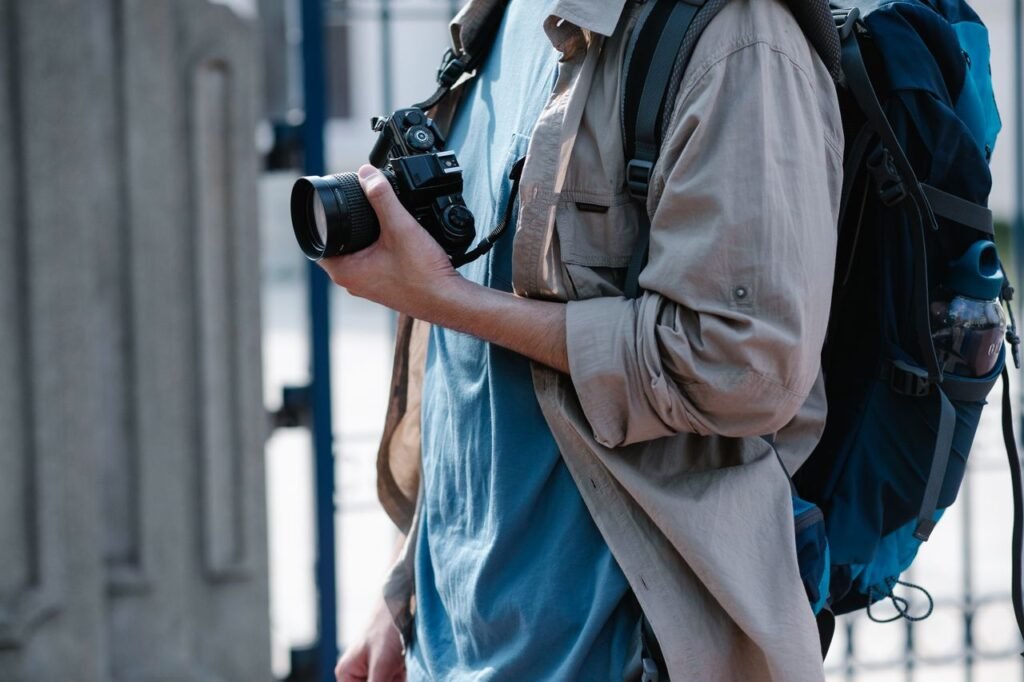
Travel photography involves walking through airports, cities, museums, parks and attractions. Every additional piece of equipment adds weight and occupies space that could be used for something else.
A camera that feels reasonably light during a five-minute test in a store can feel very different after several hours of walking.
Consider the complete setup rather than only the camera body. A compact camera body paired with a very large lens may no longer be a compact travel system.
When comparing cameras, check the weight and size of the lens you expect to use most often. The camera body is only part of what you will actually carry.
2. Smartphone, Compact Camera or Interchangeable-Lens Camera?
There is no single correct answer. Each format solves a different problem.
| Option | Main Advantage | Main Consideration |
|---|---|---|
| Smartphone | Maximum convenience and easy sharing | Less physical control and lens flexibility than many dedicated systems |
| Compact Camera | Portable dedicated camera | Lens is generally fixed to the camera |
| Mirrorless Camera | Strong balance of quality, features and lens choice | Lenses add cost, weight and complexity |
| DSLR | Large established lens ecosystems and traditional handling | Many combinations are larger and heavier than compact alternatives |
3. Do You Really Need a Dedicated Camera?
Modern smartphones are capable of producing very good vacation photos, especially in favorable lighting.
They also have a major advantage: you are probably carrying one anyway.
A dedicated camera becomes more attractive when you want greater control, different optical focal lengths, specific photographic features or simply enjoy photography enough to carry separate equipment.
Buying a dedicated camera does not automatically improve your photographs. Learning composition, light and timing remains important regardless of the equipment.
4. What Is a Mirrorless Camera?
Mirrorless cameras are digital cameras that do not use the traditional mirror mechanism found in a DSLR.
Many modern mirrorless systems combine interchangeable lenses with advanced autofocus, electronic viewfinders and strong photo and video features.
They have become particularly attractive for travel because manufacturers can offer relatively compact combinations, although some professional mirrorless cameras and lenses are still large and heavy.
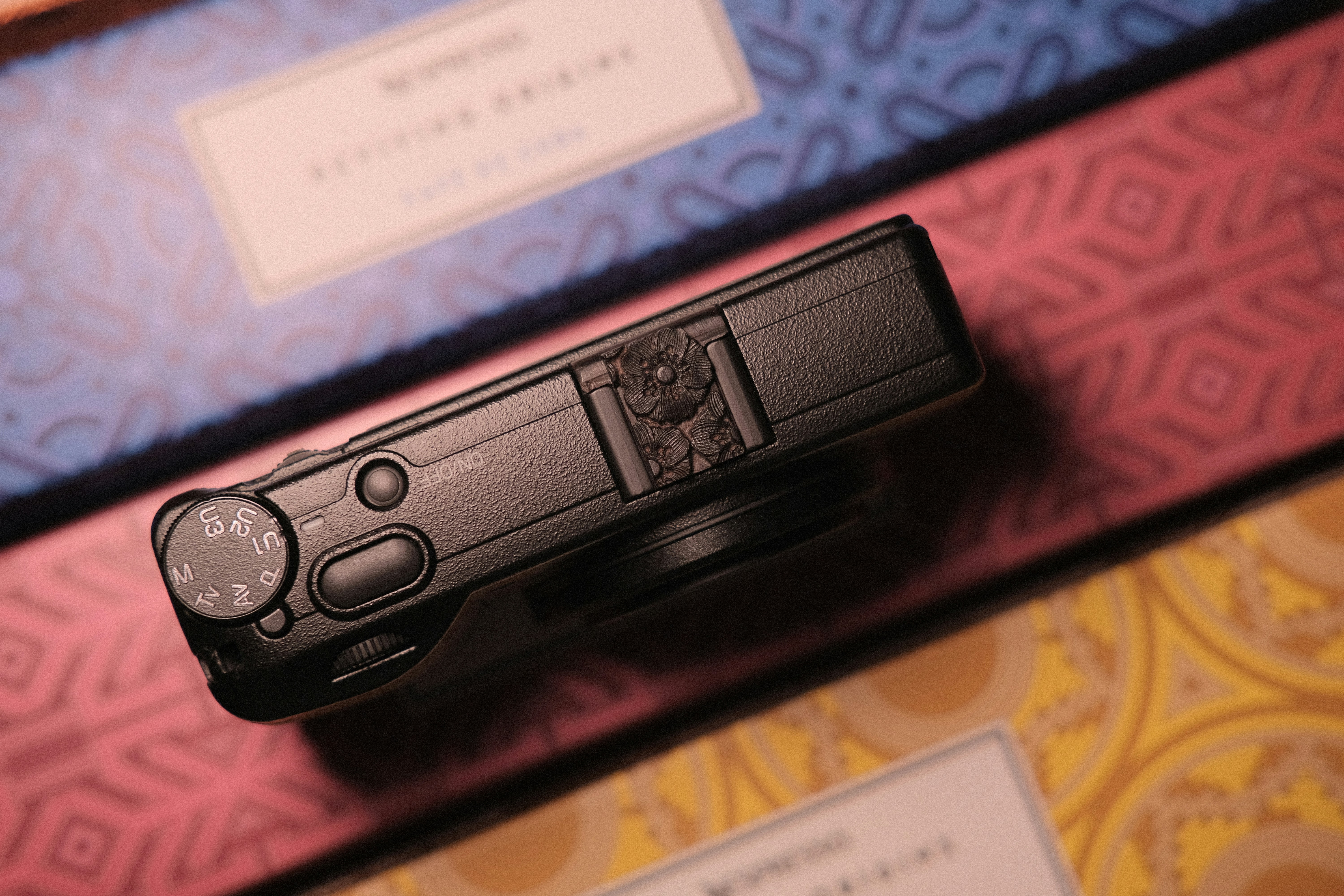
5. What Is a Compact Camera?
A compact camera typically combines the camera body and lens into one relatively portable package.
The major advantage for travel is simplicity. There are no additional lenses to change or pack.
Some compact cameras prioritize small size, while others use larger lenses or sensors and may not actually fit comfortably in a pocket.
If your priority is having a dedicated camera without building an entire lens system, a compact camera can make sense.
6. Sensor Size: Does Bigger Always Mean Better?
Larger sensors can provide advantages in areas such as low-light performance, dynamic range and control over depth of field, but sensor size should not be evaluated in isolation.
Larger sensors can also lead to larger or more expensive lenses depending on the system.
For travel, the best balance may be more important than obtaining the largest possible sensor.
7. How Many Megapixels Do You Need?
Megapixels describe image resolution, but a higher number does not automatically mean a better camera.
Higher-resolution files can provide additional cropping flexibility and support large outputs, but they also require more storage space and can create larger files to transfer and edit.
For typical vacation photography and online sharing, resolution is only one of many specifications to consider.
Do not choose a travel camera based on megapixel count alone.
8. Lens Choice Can Matter More Than the Camera Body
If you choose an interchangeable-lens camera, think about lenses before committing to the system.
A useful travel lens should cover the types of scenes you expect to photograph without forcing you to change lenses constantly.
Many travelers prefer a versatile zoom because it can cover wide scenes, everyday photographs and more distant subjects in a single package.
Others prefer a small prime lens because of its compact size or optical characteristics.
9. What Focal Length Is Good for Travel?
There is no perfect focal length because travel includes many different subjects.
Wide Angle
Useful for architecture, landscapes, interiors and locations where you cannot move farther away.
Standard Range
Useful for everyday scenes, people, streets, food and general vacation photography.
Telephoto
Useful for distant subjects, details and situations where physically moving closer is not possible or appropriate.
Versatile Zoom
Can reduce the need to carry and change multiple lenses during a trip.
10. Autofocus Is Important for Travel
Vacation moments do not always wait for you to prepare the camera.
Reliable autofocus can be particularly useful when photographing people, moving subjects or spontaneous moments.
When comparing cameras, look beyond claims about the total number of focus points. Consider how easily the camera identifies and tracks the subjects you expect to photograph.
11. Image Stabilization Can Be Useful
Stabilization can help reduce the effect of camera movement in certain shooting situations.
Some cameras provide stabilization in the body, some lenses provide optical stabilization, and some systems combine both approaches.
Stabilization does not freeze a moving subject, however. If the person or object itself is moving, an appropriate shutter speed may still be necessary.
12. Think About Low-Light Photography
Travel does not stop when the sun goes down.
Restaurants, city streets, indoor attractions and evening scenes can all challenge a camera.
Sensor performance, lens aperture, stabilization and your ability to select appropriate settings can all affect low-light results.
If nighttime photography is important to you, evaluate the complete camera and lens combination rather than relying on one specification.
13. Battery Life Matters on Vacation
Access to a charger is not always convenient when you spend an entire day sightseeing.
Check expected battery performance and consider whether carrying an additional compatible battery makes sense for your travel style.
Heavy use of displays, video, wireless connectivity and other features can affect battery consumption.
Make charging the camera part of your evening travel routine, just like charging your phone.
14. USB Charging Can Make Travel Easier
Cameras that support convenient in-camera charging or USB power options can simplify travel, depending on the model and its requirements.
Instead of carrying several unrelated chargers, you may be able to reduce the number of power accessories in your bag.
Check the camera manufacturer’s specifications because charging standards, cables and power requirements vary.
15. Weather Resistance Is Useful — But Understand Its Limits
Travel can expose equipment to dust, humidity, cold and unexpected rain.
Some cameras and lenses include weather-resistant construction, which can provide additional protection under appropriate conditions.
However, weather resistance does not automatically mean waterproof. Follow the manufacturer’s limitations and protect equipment appropriately in difficult conditions.
16. Don’t Ignore the Camera’s Controls
Specifications are easy to compare online, but ergonomics are personal.
A camera may receive excellent reviews and still feel uncomfortable in your hands.
Consider button placement, grip, menu system, viewfinder, touchscreen and how quickly you can reach frequently used settings.
If possible, handle a camera before buying it.
17. Viewfinder or Screen?
A rear screen is useful for many travel situations, especially when composing from unusual angles.
An electronic or optical viewfinder can be valuable in bright conditions and for photographers who prefer holding the camera closer to their face.
Articulating or tilting screens can also help when photographing above a crowd, close to the ground or when recording video.
18. If You Shoot Video, Look Beyond Resolution
Seeing “4K” or another resolution label does not tell you everything about a camera’s video capabilities.
Consider autofocus, stabilization, recording limits, audio options, frame rates, heat management and how easy the camera is to operate while recording.
Travelers who only record short vacation clips may have very different needs from dedicated video creators.
19. Storage and Memory Cards
High-resolution photos and video can consume storage quickly.
Make sure the memory card type, capacity and performance are appropriate for your camera and the recording modes you intend to use.
It can also be useful to have a backup plan for important images during longer trips.
20. Don’t Spend Your Entire Budget on the Camera Body
Your real photography budget may include much more than the camera itself.
Remember to Budget For:
- Lens or lenses
- Memory cards
- Additional battery if needed
- Protective bag or case
- Appropriate charging equipment
- Cleaning supplies
- Optional tripod or support equipment
A less expensive camera with the right lens and accessories may be more useful than spending everything on a premium body and having no budget left for the rest of the system.
What Type of Travel Camera Fits You?
| If You Prioritize… | Consider Starting With… |
|---|---|
| Maximum convenience | Your smartphone |
| Small dedicated camera | A compact camera |
| Balance of size and lens flexibility | A compact mirrorless system |
| Maximum lens flexibility | An interchangeable-lens system |
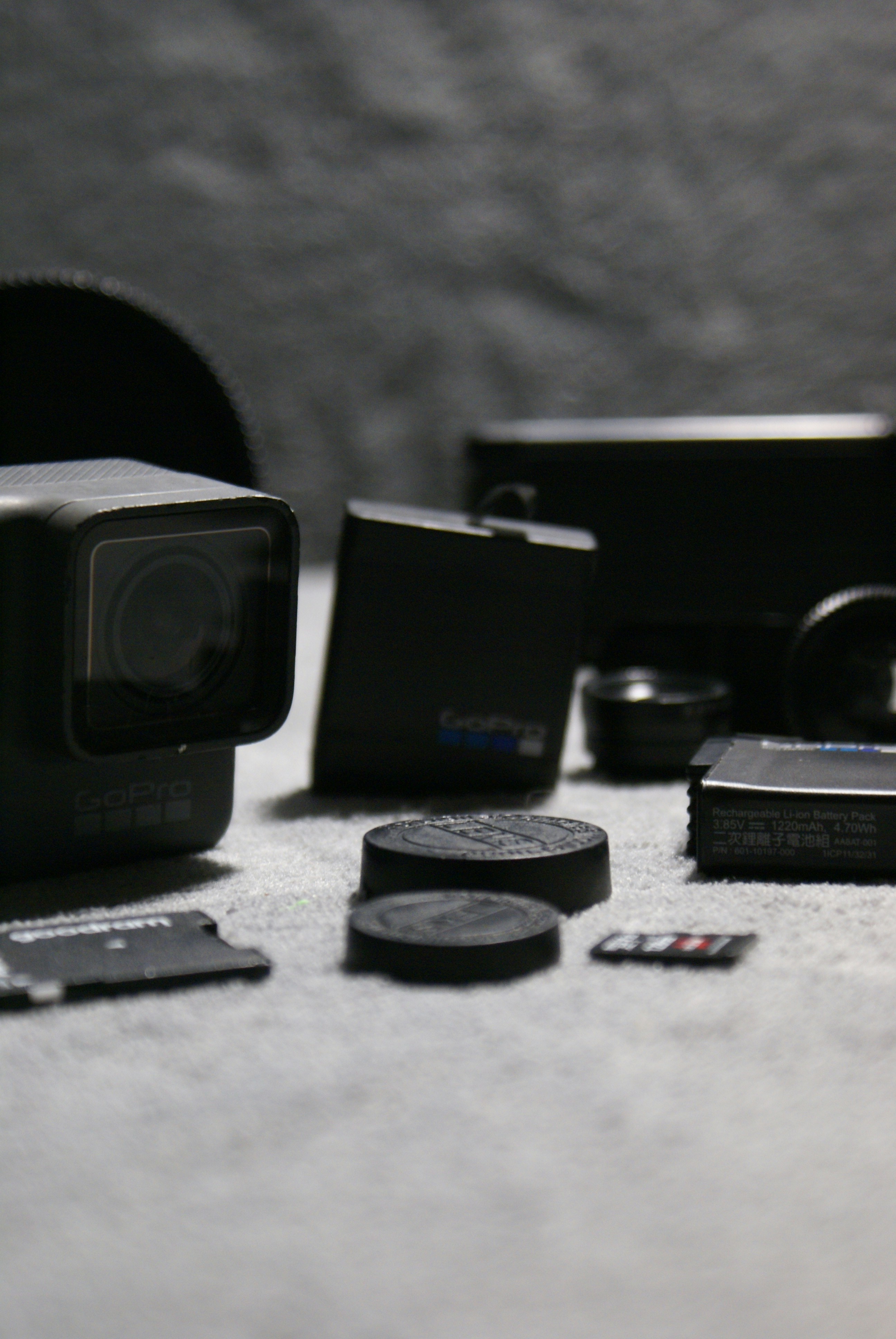
| Action and adventure video | An action camera may complement your main camera |
Avoid Buying More Camera Than You Want to Carry
It is easy to build an impressive camera system at home and discover that traveling with it is inconvenient.
Every lens, charger, battery and accessory must be packed, carried and kept secure.
For many travelers, a smaller system that covers most situations is more useful than a large collection of equipment.
Before buying another lens for travel, ask yourself: “Would I actually carry this for eight hours while sightseeing?” If the answer is no, it may not belong in your travel kit.
Should You Buy a Camera Just Before a Vacation?
If possible, avoid making your first day of vacation the first day you use a new camera.
Spend some time learning the basic controls at home. Practice changing exposure settings, focus modes and other frequently used functions.
Also make sure your batteries, memory cards and charging setup work as expected before leaving.
The goal is to enjoy the destination rather than spend the trip reading the camera manual.
Frequently Asked Questions
What type of camera is best for travel photography?
It depends on your priorities. Smartphones offer maximum convenience, compact cameras simplify dedicated photography, and interchangeable-lens cameras provide greater flexibility. Portability should be considered alongside image quality.
Is a mirrorless camera good for traveling?
Mirrorless cameras can be excellent travel options because many systems offer a useful combination of image quality, autofocus, video features and interchangeable lenses. Size varies considerably between models and lenses, however.
Do I need a full-frame camera for travel photography?
No. Full-frame cameras can offer advantages, but smaller-sensor cameras can also produce excellent travel photographs while potentially allowing for smaller or less expensive setups.
How many lenses should I take on vacation?
There is no required number. Many travelers benefit from keeping the kit simple and carrying only lenses they expect to use regularly. A versatile zoom can reduce the need for frequent lens changes.
Is a phone good enough for vacation pictures?
For many travelers, yes. Smartphones are convenient and capable of producing strong images in many situations. A dedicated camera becomes more valuable when you want additional optical or creative control.
The Best Travel Camera Is the One You’ll Actually Carry
Do not choose a travel camera by looking at specifications alone. Think about how much weight you want to carry, what you photograph, whether you need interchangeable lenses and how quickly you want to operate the camera.
A simple, portable camera that stays with you throughout the day can be far more useful than a technically superior system sitting back at the hotel. Choose the equipment that supports your trip instead of allowing the equipment to become the trip.