Flying for the first time can feel complicated because airports have their own language, procedures and timelines. Check-in, baggage drop, security, boarding groups and gates are routine for frequent travelers but can be confusing when you have never done them before.
The process is much easier once you know what happens in what order. This guide walks through a typical airport journey from preparing at home to collecting your baggage after landing.
Quick answer: Prepare your documents before leaving home, arrive with enough time for your specific airport and flight, complete check-in and baggage drop if required, pass through security, locate your gate and monitor the airline’s updates. Once boarding begins, follow your boarding pass and crew instructions.
Your First Flight: The Entire Process
Check documents, baggage rules, terminal and flight information.
Find your airline’s check-in or baggage-drop area if needed.
Follow the instructions provided at the checkpoint.
Check airport displays and airline notifications for updates.
Have your boarding pass and required identification ready.
Follow the cabin crew’s safety instructions and enjoy the trip.
Follow signs for connections, immigration, baggage claim or exit.
1. Check Your Travel Documents Before Leaving Home
Your first airport check should happen before you leave home.
Make sure you have the identification and travel documents required for your itinerary. International trips can involve passports, visas or other entry requirements depending on your nationality and destination.
Check the validity and requirements well before travel rather than waiting until the day of departure.
Before Leaving Home
- Check your flight status
- Confirm the departure airport and terminal
- Have the required identification or passport
- Check destination entry requirements
- Review your baggage allowance
- Have your booking information available
- Charge your phone
2. Check In for Your Flight
Check-in confirms your presence for the flight and normally results in your boarding pass being issued.
Many airlines allow online or mobile check-in before arriving at the airport. Depending on your itinerary, however, document verification or another airport procedure may still be required.
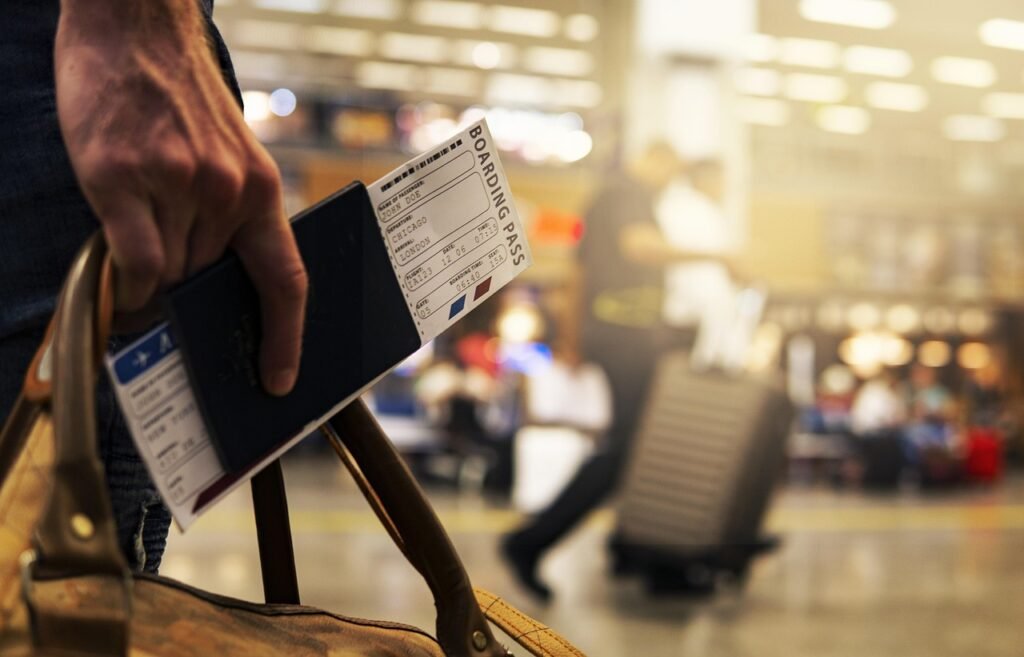
Your boarding pass generally shows information such as your flight number, boarding information and seat assignment when one has been allocated.
3. Understand Your Baggage Allowance
Do not assume every airline ticket includes the same baggage.
Depending on the airline and fare, your ticket may include a personal item, carry-on bag, checked suitcase, a combination of these or different limits.
Size, weight and fees vary, so check your actual booking before packing.
A suitcase sold as “carry-on size” is not automatically accepted by every airline. Compare its actual dimensions with your airline’s current limit.
4. How Early Should You Arrive at the Airport?
There is no universal arrival time that works for every flight.
Airport size, destination, security lines, checked baggage, airline deadlines and whether the flight is domestic or international can all affect how much time you need.
Use the airline and airport’s current recommendations for your particular departure rather than relying on a single rule for every trip.
For your first flight, allowing additional time can reduce stress and give you time to understand the airport layout.
5. What Happens When You Enter the Airport?
Large airports can look intimidating, but signs are designed to guide passengers through the process.
If you need to check a suitcase or complete an airline procedure, find your carrier’s check-in area. Departure screens can help identify the appropriate counter or zone.
If you are already checked in, have the required boarding pass and do not need an airline counter, you may be able to proceed toward security, depending on the airport and itinerary.
6. Checking a Suitcase
At baggage drop, the airline accepts your suitcase and attaches a baggage tag identifying its routing.
Keep the baggage receipt or tracking information provided to you. It can be useful if the bag does not arrive as expected.
Once the suitcase is checked, you normally will not have access to it again until the appropriate baggage-claim point.
Keep travel documents, medication, valuables and essentials you may need during the journey with you rather than inside your checked suitcase.
7. Going Through Airport Security
Security screening is one of the parts of flying that makes first-time travelers most nervous, but the process is generally straightforward when you follow the instructions at the checkpoint.
You will present the required documents and place appropriate belongings through screening equipment. Depending on the airport and screening technology, instructions for electronics, liquids, jackets, shoes and other items may differ.
Watch the signs and follow the security officer’s instructions rather than assuming procedures are identical at every airport.
8. What About Liquids?
Cabin baggage can be subject to security restrictions concerning liquids, aerosols and gels.
Because rules and screening technology can differ by jurisdiction and can change over time, verify the current requirements of the security authority responsible for your departure airport.
Medication, infant supplies and other categories may have specific procedures or exceptions, so check official guidance when applicable.
9. After Security: Find Your Gate
Once through security, check an airport departure display and confirm your flight number, destination and gate.
Do not rely exclusively on the gate printed or displayed earlier. Gate assignments can change.
Airports can be very large, and walking or internal transportation time between areas can be significant. Find out where your gate is before deciding how much time you have for food or shopping.
First find the gate. Then get coffee. Knowing exactly where you need to be removes one of the biggest sources of first-time airport stress.
10. Understand the Difference Between Boarding Time and Departure Time
The departure time is not necessarily the time you should arrive at the gate.
Boarding starts before departure, and airlines establish deadlines for when passengers must be present and when boarding closes.
Check your boarding pass, airline application and gate information for the applicable boarding time.
11. How Boarding Works
Airlines typically organize boarding using groups, zones, rows, cabin classes or another system.
There is usually no need to stand in line as soon as the first group is called if your boarding group has not been invited yet.
Listen to announcements and watch the gate displays. When your group is called, have your boarding pass and required identification ready.
12. Finding Your Seat
Your boarding pass normally identifies your seat using a row number and letter, such as 18A or 24C.
Row numbers are marked inside the cabin. Seat letters identify positions within the row.
Place permitted larger cabin baggage in an appropriate overhead bin and smaller personal items according to airline and crew instructions.
If you are unsure where something belongs, ask a crew member rather than blocking the aisle while trying to figure it out.
13. What Happens Before Takeoff?
Once boarding is complete, the crew prepares the cabin for departure.
Pay attention to the safety demonstration even if people around you appear distracted. It explains important information about the specific aircraft, including exits and safety equipment.
Make sure your seat belt is fastened and follow instructions concerning seats, tray tables, baggage and electronic devices.
14. What Does Takeoff Feel Like?
During takeoff, the aircraft accelerates along the runway before lifting into the air.
You may feel pushed gently back into your seat as the aircraft accelerates. After leaving the ground, changes in engine sound and aircraft attitude are normal parts of different phases of flight.
If you are nervous, remember that unfamiliar sensations can feel more dramatic simply because you have not experienced them before.
15. What Happens During the Flight?
Once the aircraft reaches a suitable phase of flight, cabin service may begin and passengers may be permitted to move around when conditions allow.
Service depends on the airline, route, aircraft and fare. Some flights provide meals or entertainment, while shorter services may offer much less.
Follow the seat-belt sign and crew instructions throughout the flight.
16. What Is Turbulence?
Turbulence is movement of the air through which the aircraft is flying. Passengers may experience it as bumps or changes in motion.
The important passenger action is simple: follow crew instructions and keep your seat belt securely fastened whenever required. Keeping it fastened while seated can also help protect you from unexpected movement.
Flight crews have operational procedures for dealing with changing conditions, so listen carefully to announcements and instructions.
17. What Happens During Landing?
As the aircraft approaches the destination, the cabin is prepared for landing.
You may notice changes in engine sound, the aircraft descending, movement of the wing’s flight-control surfaces and the landing gear being extended. These are normal parts of the arrival process.
Remain seated with your seat belt fastened until the crew indicates that it is safe to get up.
18. Don’t Stand Up Immediately After Touchdown
Landing on the runway does not mean the flight is finished.
The aircraft still needs to taxi to its parking position. Keep your seat belt fastened and remain seated until the seat-belt sign is switched off and the crew permits passengers to stand.
When retrieving an overhead bag, remember that items may have shifted during flight.
19. Where Do You Go After Leaving the Aircraft?
Follow the airport signs appropriate to your journey.
| Your Situation | Signs to Look For |
|---|---|
| Final destination with checked bag | Baggage Claim / Baggage Reclaim |
| Final destination without checked bag | Exit / Arrivals |
| International arrival | Immigration / Passport Control as applicable |
| Connecting flight | Connections / Transfers / Flight Connections |
International arrivals can involve immigration, customs and baggage procedures that vary by country and itinerary.
20. Collecting Your Checked Bag
Airport screens in the baggage-claim area normally indicate which carousel is assigned to your arriving flight.
Check the bag carefully before leaving. Similar suitcases are common.
If your bag does not arrive, follow the airline or airport procedure for reporting delayed baggage before leaving the appropriate area when possible. Keep your baggage receipt and travel information available.
What Should a First-Time Flyer Keep in Their Carry-On?
First-Flight Essentials
- Required identification or passport
- Boarding pass or access to it on your phone
- Wallet and payment methods
- Required medication
- Phone and appropriate charging equipment
- Travel documents
- Essential valuables
- A basic change of clothes for longer journeys when practical
Common First-Time Flying Mistakes
- Not checking baggage rules before arriving
- Confusing boarding time with departure time
- Putting essential medication in checked baggage
- Going to the wrong terminal
- Assuming the gate will never change
- Waiting too long before finding the gate
- Ignoring airline notifications
- Forgetting to check entry requirements for an international trip
Frequently Asked Questions
Is flying for the first time difficult?
The process can seem unfamiliar, but airports provide signs, displays and staff to guide passengers. Understanding the sequence before you travel can make the experience much easier.
How early should a first-time flyer arrive?
Follow the current recommendation from your airline and departure airport. Required time varies according to the airport, route, baggage and other factors. A first-time traveler may prefer additional time to navigate the airport without rushing.
Can I show my boarding pass on my phone?
Mobile boarding passes are widely used, but availability can depend on the airline, airport and itinerary. Check your airline’s instructions for your specific flight.
What if I don’t know where to go at the airport?
Check airport signs and departure screens, or ask airline and airport staff. Have your flight number available so they can direct you more easily.
What if my gate changes?
Gate changes are possible. Monitor airport displays, airline notifications and announcements until boarding.
Your First Flight Is Easier Once You Know the Routine
Airports can look complicated from the outside, but the passenger journey follows a logical sequence: prepare, check in, clear security, find the gate, board, fly and follow the arrival signs.
Give yourself enough time, keep your important documents accessible and follow the instructions provided by the airline, airport and crew. After doing it once, the entire process will already feel much more familiar.